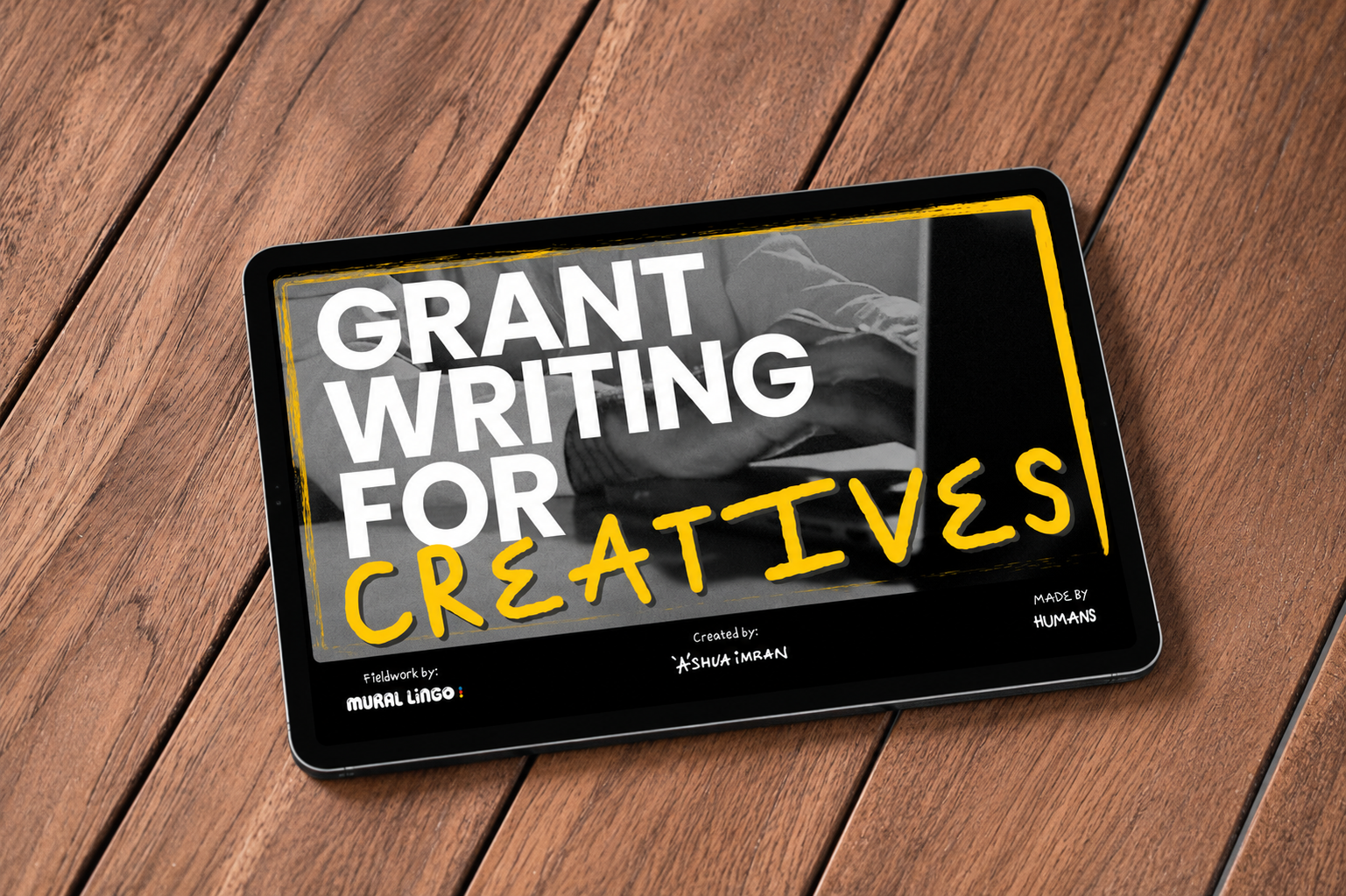
A working toolkit for artists, designers and studios who want to fund their own work. Five chapters covering how funders actually think, the eight sections every proposal is built from, how to name an audience precisely, how to build a budget that survives scrutiny, and how to turn a proposal into a pitch deck.
Includes an impact tracker, a budgeting checklist, a pitch deck checklist, a glossary of grant terms, and free downloadable proposal and pitch deck templates.
Written from a decade of applications submitted, grants won and rejections collected across public agencies, corporations, foundations and institutions.
Digital publication, 80-pages.
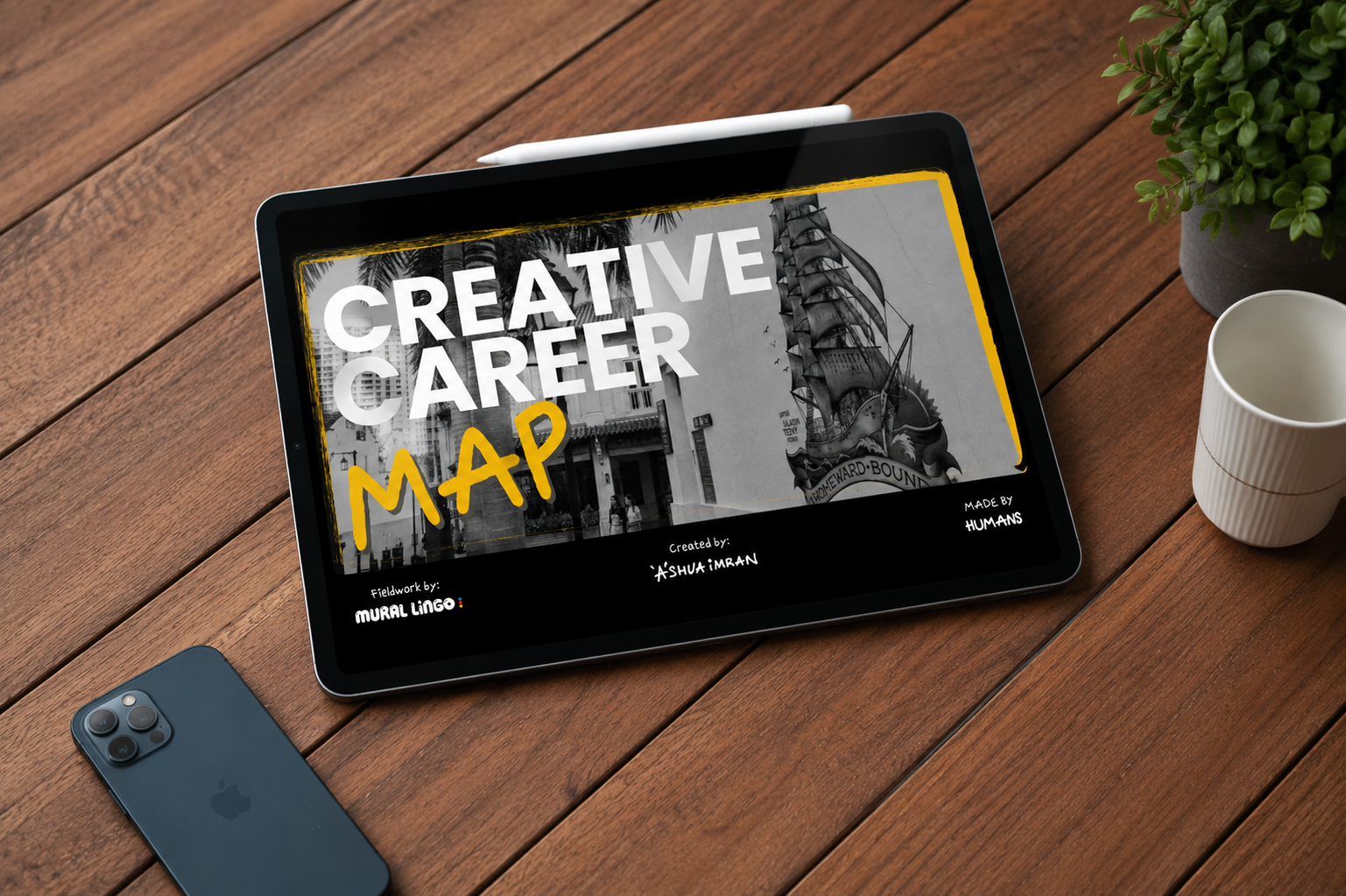
A working toolkit for artists, designers and creatives building a career that pays. Five chapters covering where you begin and why it does not determine where you end up, how to turn an internship into real proof of work, the four positions a creative can earn from, the pathways inside each one, and the ESC Method for leaving the struggling-artist phase behind.
Includes the Creative Quadrant framework, three Practice Labs, a green-flags and red-flags exercise, an internship readiness checklist, a final career readiness checklist, a glossary of twelve terms, and bonus pages from the Mural Maker's Playbook.
Written from a decade running a creative studio in one of the most expensive cities in the world, and from mentoring interns, designers and freelancers through the same decisions.
Digital publication, 80 pages.
FAQs
-
A 80-page digital publication covering five chapters: where creative careers begin, how to turn an internship into proof of work, the Creative Quadrant, the pathways inside each position, and the ESC Method. Three Practice Labs, two checklists, a green-flags exercise, a glossary, and bonus pages from the Mural Maker's Playbook. Delivered as a PDF, yours to keep.
-
Final-year students, recent graduates, self-taught creatives, career changers, and anyone a few years in with more questions than answers. It assumes no business background.
-
No. The frameworks are structural rather than local, the Quadrant, the pathways, and the ESC Method apply wherever you work. Examples and case scenarios are drawn from a Singapore studio and a Southeast Asian market, so some references are regional. The reasoning is not.
-
Yes. Institutions, schools and studios can license the toolkit for a cohort, and workshops can be run on site or online. One-to-one proposal reviews are also available, where your draft is read and returned with written feedback before you submit. Email hello@ashuaimran.com with what you need and we will come back with options.
-
Digital downloads cannot be returned. Email hello@ashuaimran.com if the file does not reach you.