Grant Writing
For Creatives
Nobody tells you why you were rejected. This toolkit shows you what assessors look for, in the order they look for it.
A working guide to developing sustainable habits to your creative practice. Supported by the SG Eco Fund.
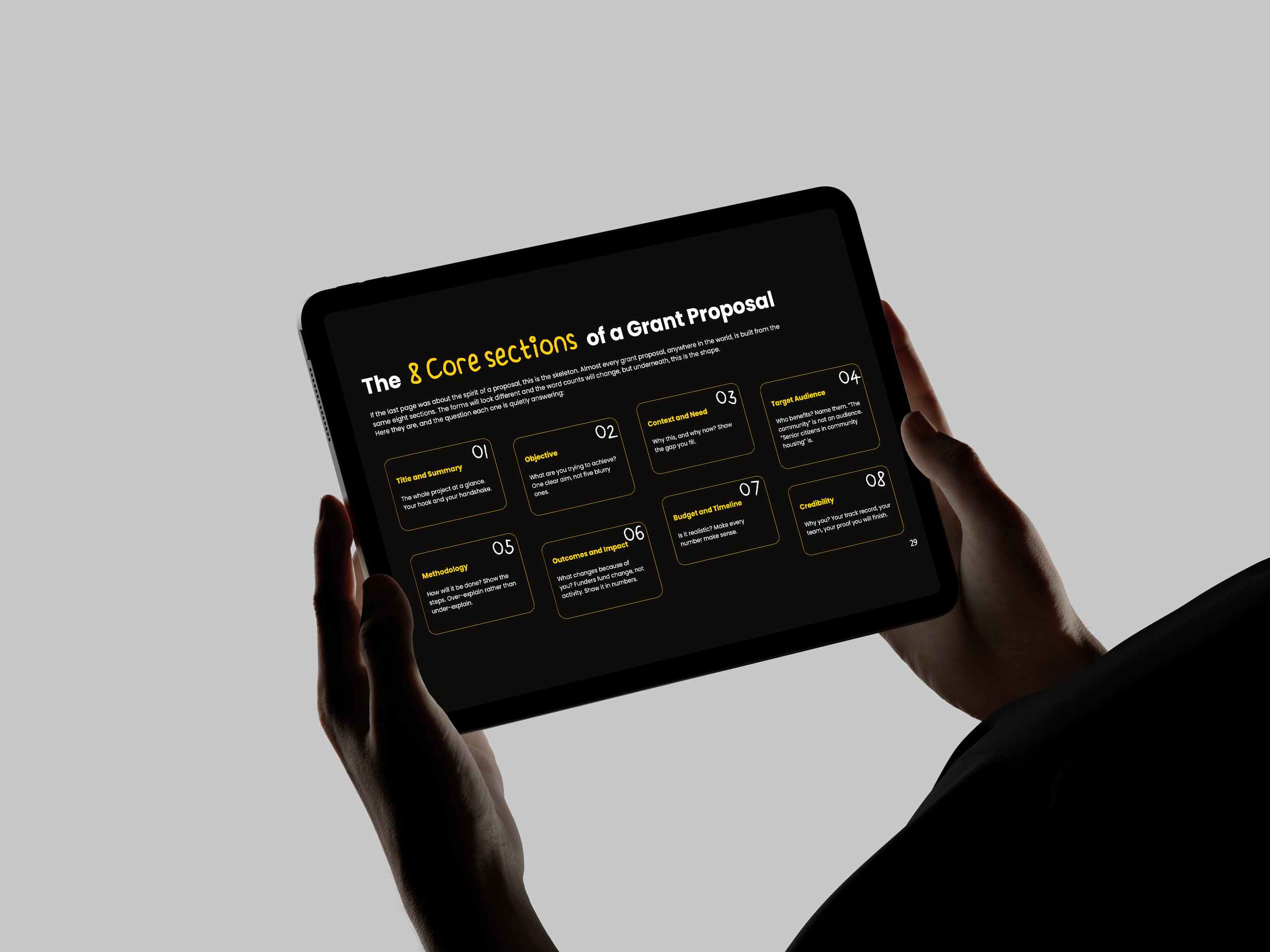
A working toolkit for artists, designers and studios who want to fund their own work. Five chapters covering how funders actually think, the eight sections every proposal is built from, how to name an audience precisely, how to build a budget that survives scrutiny, and how to turn a proposal into a pitch deck.
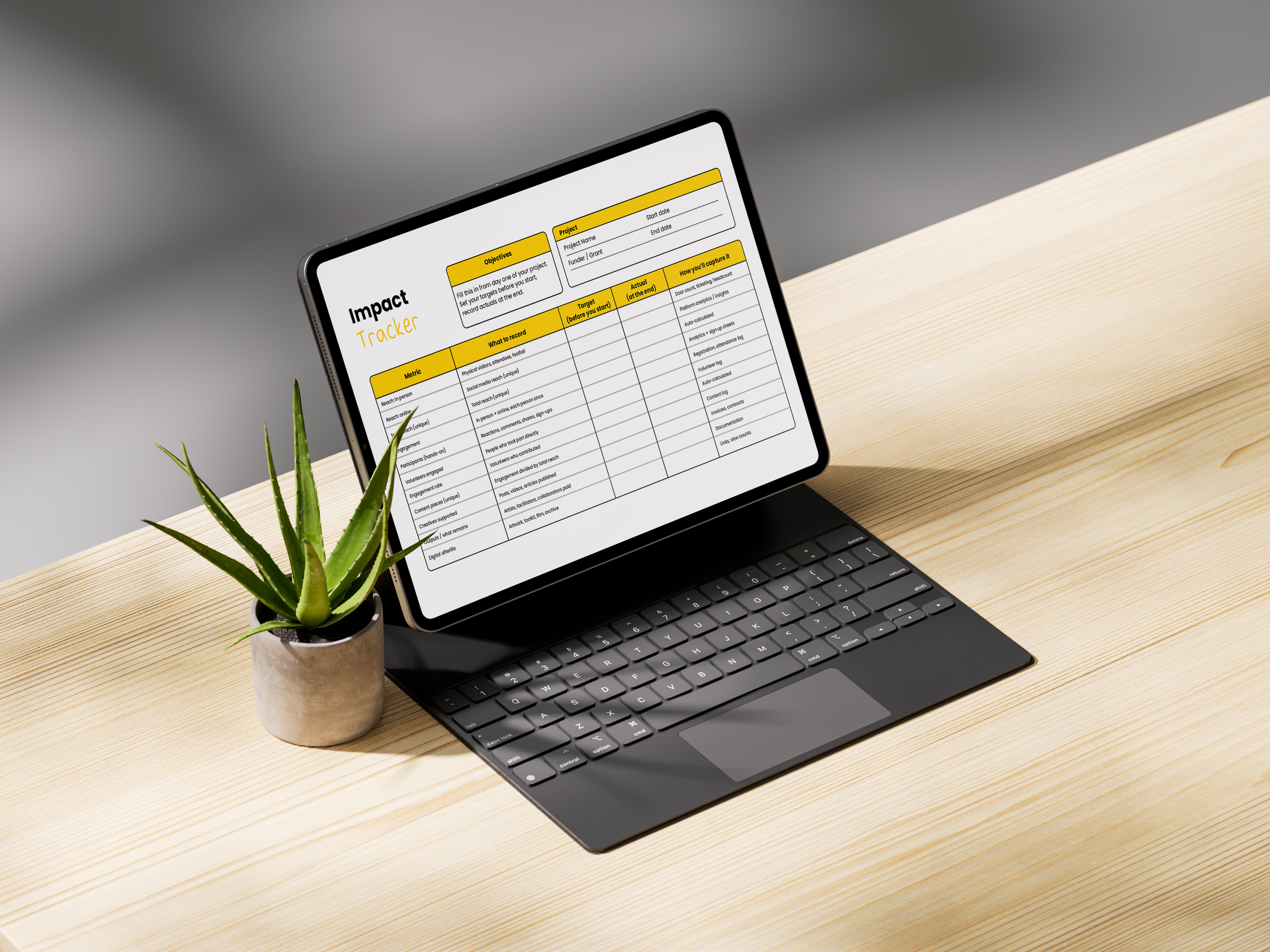
Includes an impact tracker, a budgeting checklist, a pitch deck checklist, a glossary of grant terms, and free downloadable proposal and pitch deck templates.
Written from a decade of applications submitted, grants won and rejections collected across public agencies, corporations, foundations and institutions.
Digital publication, 80-pages.
What's inside

• pages, PDF
• Proposal anatomy, section by section
• Budget structure and costing templates
• Narrative framework: problem, solution, impact
• The common mistakes that end a submission early
• Worksheet / Practice Lab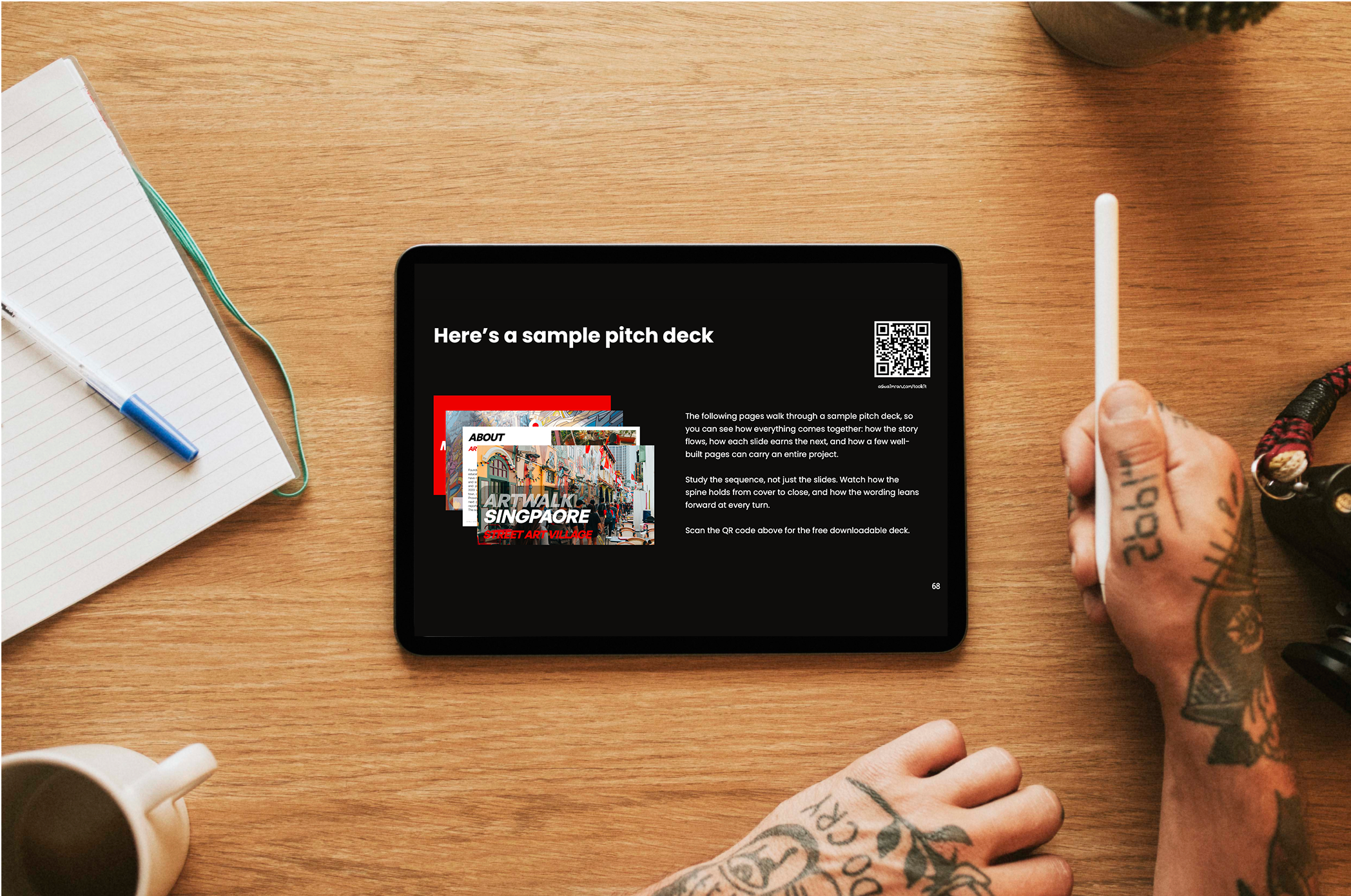
Who this is for
Artists and creative practitioners applying for public or private funding for the first time, or applying repeatedly without result. Useful whether you are writing for an arts council, a foundation, a corporate partner, or a government scheme.
This is not a course about one country's grant system. The structure works anywhere.
Why it exists
Most artists lose funding at the writing stage, not the idea stage. The work is strong and the application is written for the wrong reader.
This is drawn from grants secured across a decade of practice, including National Arts Council and SG Eco Fund funding, and from mentoring and faciltating workshops at LASALLE College of the Arts, Nanyang Academy of Fine Arts (NAFA), and University of the Arts (UAS).
A working toolkit for artists, designers and studios who want to fund their own work. Five chapters covering how funders actually think, the eight sections every proposal is built from, how to name an audience precisely, how to build a budget that survives scrutiny, and how to turn a proposal into a pitch deck.
Includes an impact tracker, a budgeting checklist, a pitch deck checklist, a glossary of grant terms, and free downloadable proposal and pitch deck templates.
Written from a decade of applications submitted, grants won and rejections collected across public agencies, corporations, foundations and institutions.
Digital publication, 80-pages.
Frequently Asked Questions
-
A 80-page digital publication, delivered instantly as a PDF. Includes an impact tracker, budgeting checklist, pitch deck checklist and glossary, plus free downloadable proposal and pitch deck templates.
-
While the examples are Singaporean, the categories are not. Every funding body described here exists in some form in most countries.
-
No. The book is built for people applying for the first time and for people who have applied and been turned down.
-
Yes. Institutions, schools and studios can license the toolkit for a cohort, and workshops can be run on site or online. One-to-one proposal reviews are also available, where your draft is read and returned with written feedback before you submit. Email hello@ashuaimran.com with what you need and we will come back with options.
-
Digital downloads cannot be returned. Email hello@ashuaimran.com if the file does not reach you.
Workshops and
mentorships at:

For institutions
These toolkits are also available as a package for schools, universities, and organisations booking a workshop. Sessions can be adapted to your students, staff, or programme.
Get in touch to talk it through.